Copyright:
Pelliconi
update
client newsletter

ArcelorMittal Europe – Flat Products
Pelliconi, founded in Bologna, Italy, in 1939, is a global leader in the production of metal and plastic closures for the food and beverage industry, with nine production plants across the world, plus international sales branches. The company produces over 32 billion caps annually.


Antonino Lo Piccolo, Corporate Quality Director, Pelliconi
“CFPA (chrome-free passivation alternative) has already been fully implemented across all steel-based products in our beverage portfolio,” says Antonino Lo Piccolo, Corporate Quality Director, Pelliconi. “And for the food segment, the transition is currently going through the technical evaluation stage.”
Chromium electroplating has been used industrially for around a hundred years. Initially applied for decorative and wear resistant purposes, its use has since expanded to a wide range of industries and applications over time. Dedicated chromium based surface treatments were later developed specifically for packaging needs, including the chromium based passivation of tinplate and, more recently, electrolytic chromium-coated steel.
Key parameters of the new legislation are not yet fixed. A decision from the European Commission is expected in the second half of 2027 or in 2028, with the restriction anticipated to replace the current authorisation regime before its expiry in mid 2030.
In this evolving regulatory context, our intent is to support the packaging market through the transition with a broad and flexible product offering.
Commenting on Pelliconi’s transition process to CFPA, Antonino Lo Piccolo adds: “The qualification is based on a structured internal validation process, designed to balance technical robustness with industrial scalability.”
ArcelorMittal's LTS is a low tin coated steel with CFPA passivation, with characteristics specifically designed to address the markets currently served by ECCS. It is the only 100% chromium-free alternative to ECCS currently available for the packaging market.

Eric Brasseur, REACH and Chemical Policy Manager, ArcelorMittal Europe – Flat Products
“We see CFPA and LTS as the future standards in packaging steel,” says Eric Brasseur, REACH and Chemical Policy Manager for ArcelorMittal Europe – Flat Products, “and we want to be well ahead of the regulatory deadlines to support our customers in making the transition.”
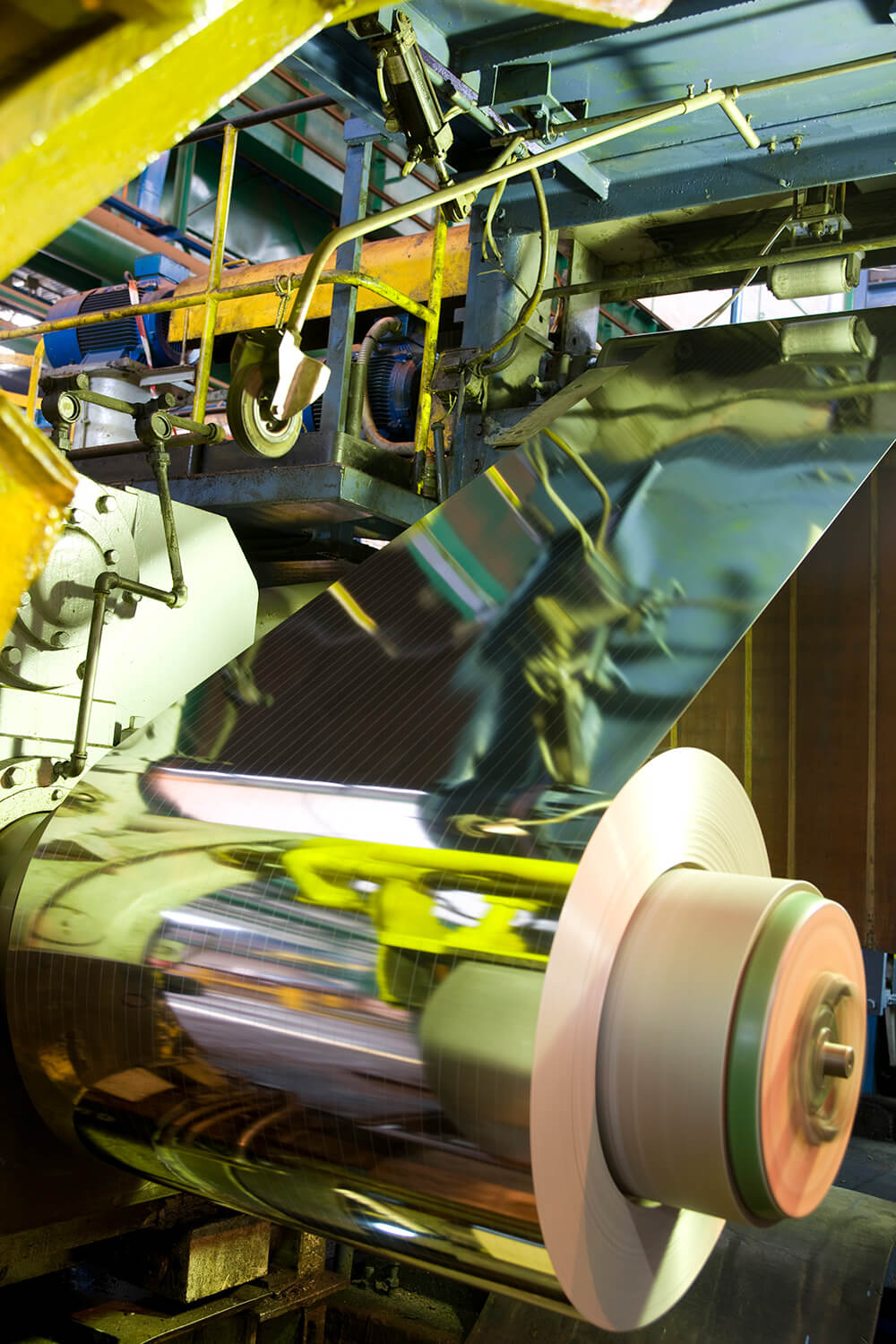
ArcelorMittal’s plant in Avilés, Spain